


When errors occur in industrial processes, the cause is rarely found in the machines themselves. Often it is inconsistent processes and data disconnects in the communication chains that hinder efficiency. Tablets designed specifically for industrial use can bridge these digital gaps. They enable digitalization and, as a result, a noticeable optimization of production and logistics processes. However, this requires thorough specification and customization of the hardware and software to fit the specific work environment.
The path to a truly smart factory inevitably involves the consistent digitalization of processes directly on the shop floor. Modern wireless technologies make data and processes accessible and visible in a decentralized manner. However, consumer hardware quickly reaches its limits in this context. What is needed are devices that combine a large screen size and high processing power with the necessary ruggedness to withstand dust, moisture, drops, and vibrations to ensure reliability. Industrial-grade tablets offer decisive business and operational advantages in this demanding environment:
Accurate data capture: Thanks to scan modules, modern camera systems, and AI analysis, data can be captured quickly and, above all, accurately in many situations, thereby significantly improving data quality within the company.
Error reduction through AR/VR: By displaying live overlays of the components requiring maintenance, potentially in conjunction with AR glasses, the error rate can be significantly reduced and productivity increased.
Mobile ERP and MES integration: Tablets running Windows as operating system can execute standard software and can therefore be easily integrated into existing ERP, WMS, and MES infrastructures. This eliminates the need for a subsequent, error-prone transfer of information from paper to IT systems.
On-site documentation: Work order management and the documentation of completed tasks, including photos, can be carried out directly on-site. This ensures that all systems are always up to date. Companies can also maintain audit-proof records of which activities were performed.
Secure internet communication: Thanks to biometric authentication, NFC readers beneath the display, 5G, Wi-Fi communication, and comprehensive encryption—both for data storage and information transmission—tablets are perfectly equipped to meet all security-related requirements.
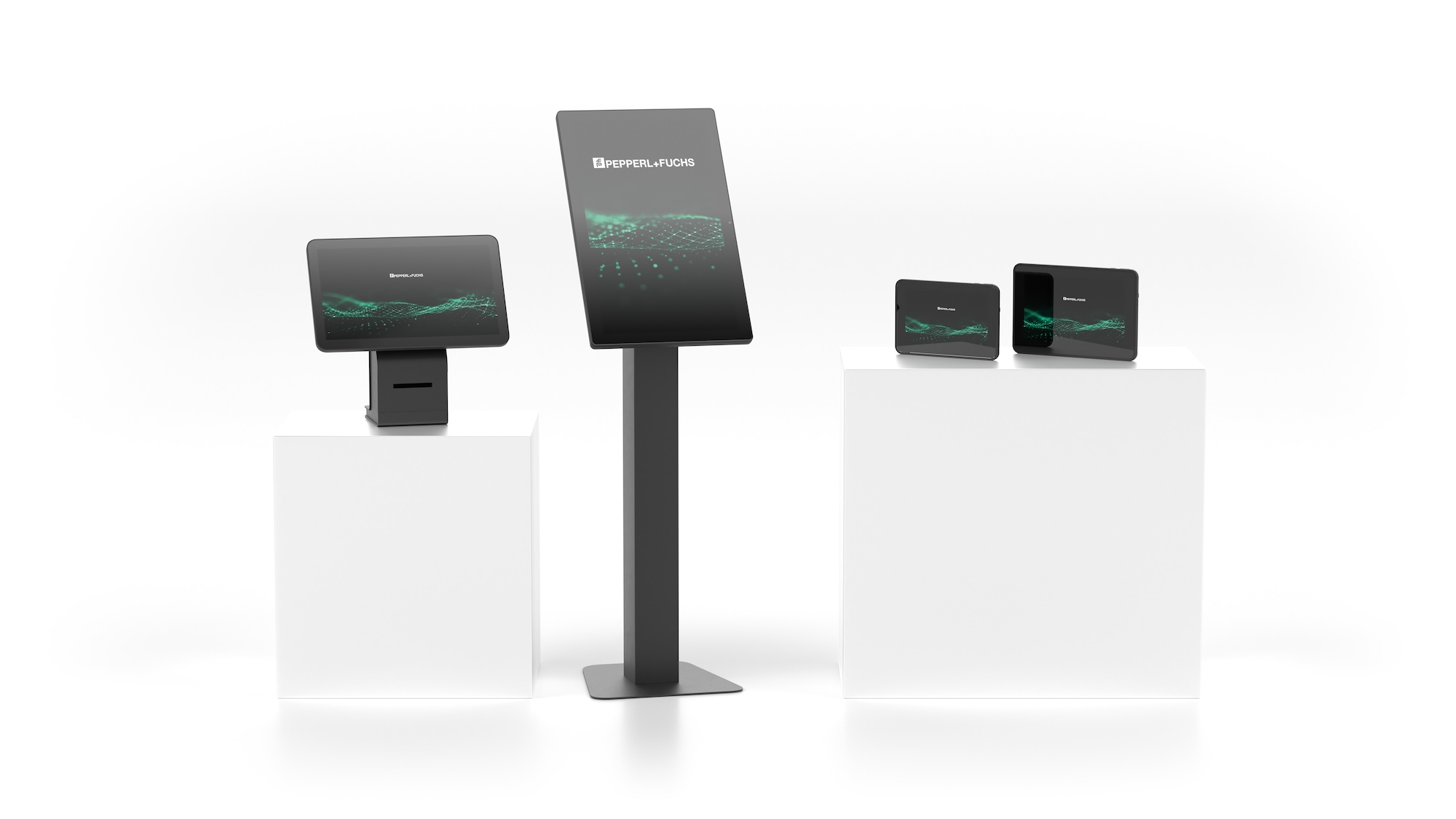
Industrial-grade tablets from Pepperl+Fuchs
To successfully implement such mobile strategies, companies are increasingly turning to specialized manufacturers. Pepperl+Fuchs is a prime example of this approach. With the Tab-IND series, developed specifically for demanding outdoor use, the company addresses the unique challenges of industrial environments. The advantage of in-house development lies in its adaptability: components can be flexibly modified, for example, using so-called SmartBacks. For certain minimum order quantities, the production of customer-specific extensions is also possible. For the end user, this means a high level of investment security as well as fewer interfaces, since hardware support and system integration come from a single source.
The Tab-IND series exemplifies the modular approach of modern industrial hardware. Application-specific modules can be added via rear interfaces, including infrared barcode scanners, power packs for shift operation, or specialized adapters for machine and vehicle fitting. Available in 8- and 10-inch models with Android or Windows operating systems, they enable use even under extreme conditions thanks to brightness levels of up to 700 cd/m² and a wide temperature range (-20° to +50° Celsius). Operation remains precise even when wearing work gloves or in wet conditions. The tablets natively support all current wireless communication standards (Wi-Fi 6E, Bluetooth 5.3 BLE, 5G, or LTE). They feature a built-in NFC reader beneath the front screen for convenient authentication.
In industrial settings, the mobile portfolio is often supplemented by stationary units. Pepperl+Fuchs offers kiosk terminals (15- and 22-inch, Android 15) for this purpose, which are ideal for access control, as information dashboards, or for interactive workflows at central hubs.
Typical use case: on the production line
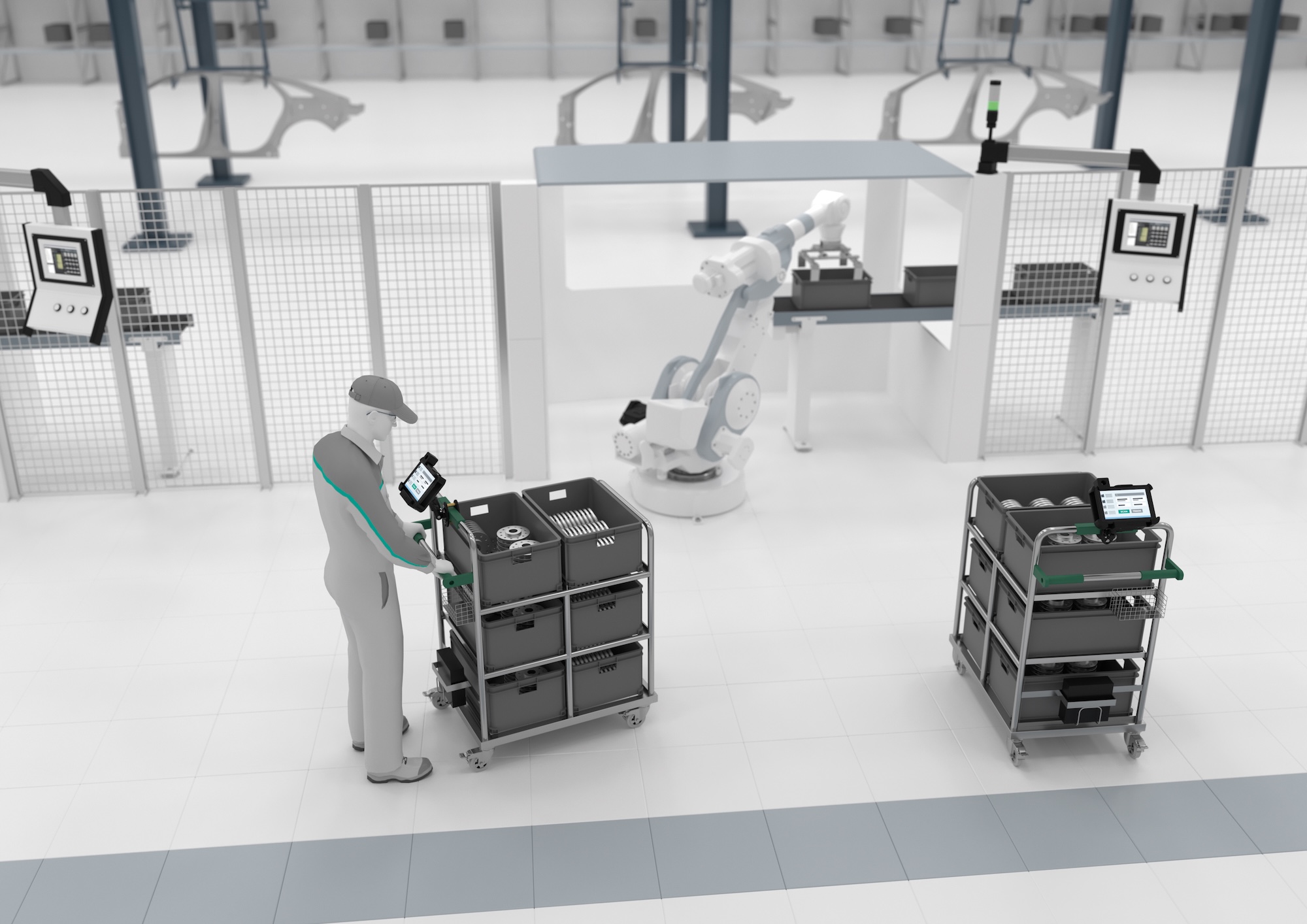
In modern manufacturing environments, tablets are increasingly complementing permanently installed HMI terminals at individual workstations. The resulting mobility enables new process steps: components or car bodies equipped with RFID or UWB tags can be scanned directly on the assembly line. The tablet synchronizes immediately with the work order management system and provides the worker with context-sensitive tasks.
The added value is also evident in maintenance. Maintenance technicians use mobile devices to read machine data on-site and proactively initiate tool changes via predictive maintenance applications. A key driver of efficiency here is the interaction between the tablets and the sensors installed in the facility. Not only can sensor data be securely retrieved via the device, but the sensors can also be configured directly and used for diagnostic purposes.
Typical use case: warehouse management
Intralogistics requires the highest levels of speed and precision, such as when transporting goods via industrial trucks. Modern industrial tablets support the process right from the moment the operator gets on board: The operator is authenticated contactless via the integrated NFC reader. The system ensures that only authorized personnel operate the vehicle, automatically provides digital work packages, and simultaneously regulates the approved routes.
During operation, the tablet serves as the central navigation and control unit. Through integration with inventory management and ERP systems (e.g., SAP), inventory levels can be scanned and reconciled in real time, either via the built-in camera, connected handheld scanners, or RFID bulk capture that takes just seconds. The system calculates route-optimized paths for the forklift and automatically documents transport orders. Switching between the vehicle dock (including a charging function) and mobile handheld use is ergonomic and can be done in a single motion.
Typical use case: logistics support
Similar opportunities exist in traditional logistics, particularly in order picking. Industrial-grade tablets combine picking, scanning, and shipping operations in a single device or in combination with a handheld scanner. To account for physical strain, ergonomic carrying and strap systems are essential.
In addition, the hardware already offers the performance reserves needed for future AI-supported applications. For example, camera-based systems will be able to automatically verify whether the correct component has been removed from a bulk goods bin. In conjunction with current mobile communication standards, the tablet remains permanently connected to the central IT infrastructure, which significantly accelerates inventory processes.
A comprehensive solution
A rugged tablet for industrial environments—one that can be configured and expanded modularly and puts an end to the paper-based processes of the past—can significantly boost productivity in companies and increase employee satisfaction. As a one-stop system solution provider, Pepperl+Fuchs not only has the right hardware and software but, thanks to decades of industrial experience, also possesses the expertise to offer solutions optimally tailored to the customer’s needs or to develop them upon request.